SaaSPropTechProduct Design2026AI10 min read
When you observe, you document
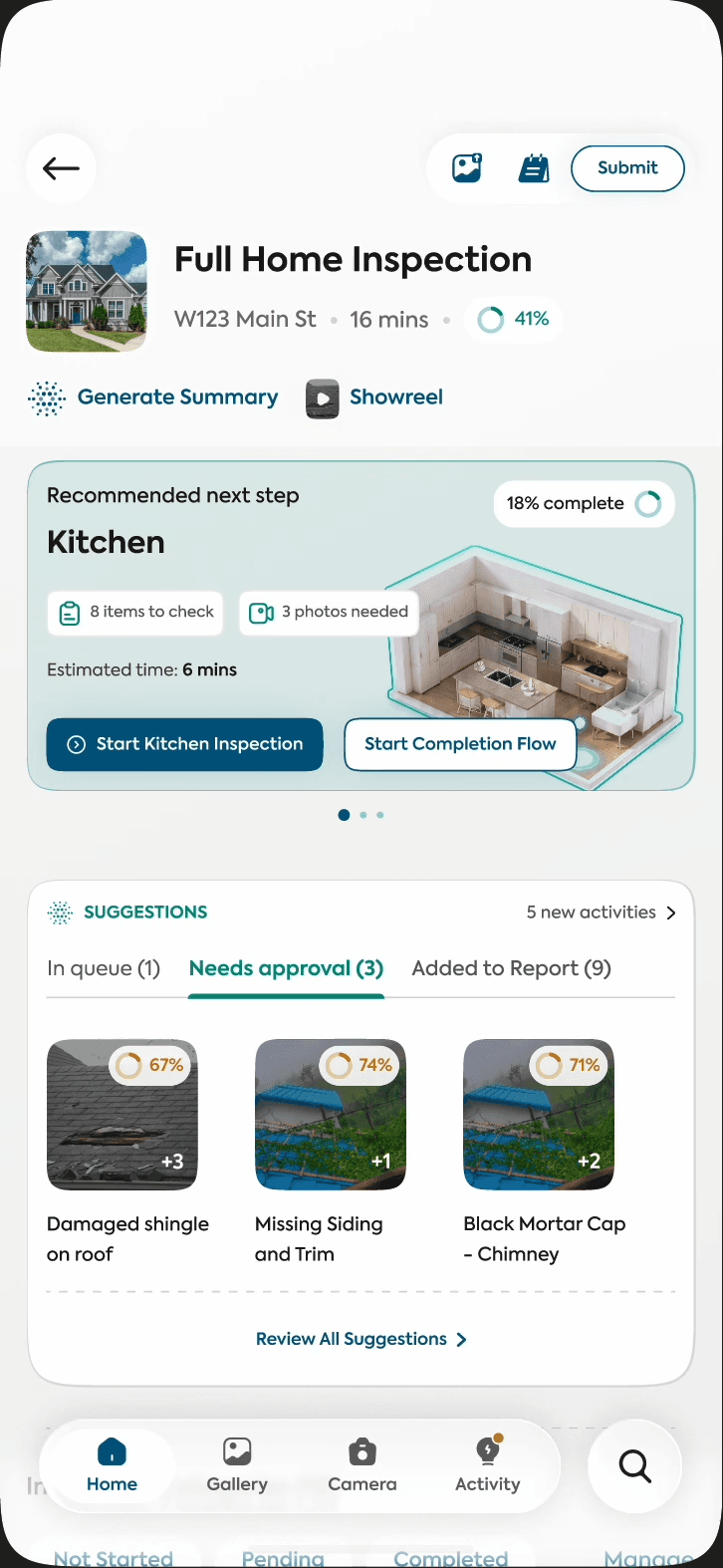
Redesigning how home inspectors capture, organise and turn visual evidence into a report. Moving the camera from a standalone capture tool into a context-aware part of the inspection workflow.
*40 minutes
INSPECTION TIME
for documenting observations
52
FEWER CLICKS
to add 18 remarks on average
89%
ADOPTION
of ML assisted remarks
*Metrics reflect the broader Winspect redesign and are not attributed solely to the camera workflow

THE PROBLEM
Inspectors don't take photos. They collect evidence.
The request was simple. The problem wasn't.
The original request was straightforward: make it easier for inspectors to add multiple photos to an observation. But tracing the existing workflow revealed that we weren't solving a camera problem. We were solving a handoff problem.

The existing workflow split one job into two
The inspectoropens camera
Captures a photo
Photo saved to uncategorisedsection in gallery
DONE?
Global orSubcategory Search
Find Remark
Add
AttachImages

The constraints
Well to start off, the inspectors were primarily 40-60 year old who feared change, and were used to the flows that they were using for almost a year now. The change management was one constraint I had to deal with throughout, but there were some others too:
| CONSTRAINT | WHAT IT MEANT FOR DESIGN |
|---|---|
| Existing reporting model | Photos still needed to map to the right inspection context |
| ML capabilities | Assistance could suggest, but couldn't become a dependency |
| Field environment | Primary actions had to remain fast and predictable, and available for offline mode (many areas did not have network) |
| Existing product architecture | We couldn't solve everything by rebuilding the workflow |
| Tech Limitations | No image recognition |
| Evidence quality | Speed couldn't come at the cost of usable documentation |
HOW MIGHT WE
Connect capture and documentation without slowing the inspection?
What the data said
To start off, I already had good understanding of how the inspectors were using the gallery from interviews and SmartLook session recordings. I had to build something that does not get in the way, but acts as a supporting layer inside the camera flow itself.
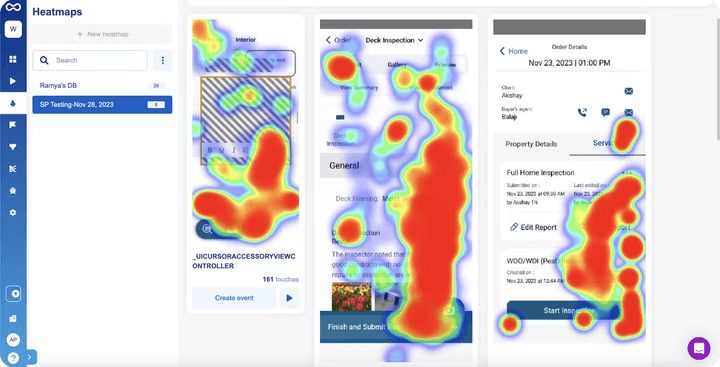
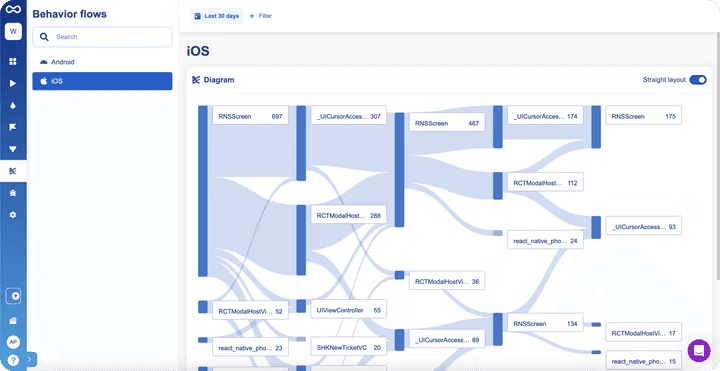
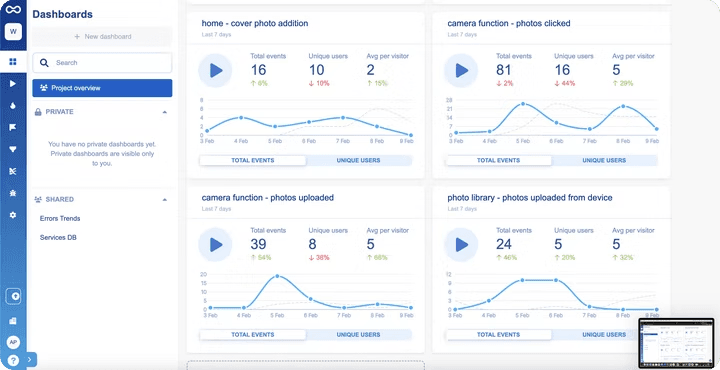
The data confirmed the synthesis, the inspectors captured multiple photos and then searched remarks to then attach the photos to the remarks
We explored 3 different ways of solving the same problem
EXPLORATION 1
The exploration focused on allowing inspectors to capture multiple photos at the same time, and then perform certain actions for the batch:
- Add to Remark: The photos taken could be attached to the remark straight away after taking them.
- Categorise: The photos taken could be categorised to the specific category so that it’s easy for the inspector to find when needed among almost 500 photos.
Why it was rejected
- The flow still did not solve the issue of combining the capture and documentation.
- Leaving the camera to document seemed like a job for later rather than doing it between the capture
- We added a step b/w the capture which irritated the inspectors who wanted to just take multiple photos to store to gallery
What worked well
- The inspectors were able to take multiple pictures in a flow undisturbed.
- The inspectors were able to categorise which reduced their work for the later stage of documentation
THE LAUNCH
What went to production
So, what shipped?
The version that shipped was a combination of multiple explorations we did with the users, each interaction was defined by what we believed would work.
The launch was made with a fallback setting, the inspectors could choose whether they wanted to enter the flow or not with a toggle that was being monitored. The flow was used by ~31% of the users (data from backend).
What the users said
Voice is cool, but the interruption isn’t
The inspectors liked that they had to just speak out the issue while taking pictures, but hated that they had to wait for the results which was delaying taking the remaining photos from the location they were inspecting
The voice is cool, but it acts as a blocker to take the rest of my photos. Switching back to the classic mode but kudos to thinking different
Quick commands save time but need better accuracy
Inspectors enjoyed using quick voice commands to tag issues but found the recognition errors frustrating and slowing down the process
Love how fast I can tag things, but it keeps misunderstanding me—hope they improve it soon!
Photo review feature boosts confidence and reduces errors
Inspectors appreciated being able to review photos immediately with voice notes, which helped verify issues before moving on
Reviewing photos with voice notes right after snapping them really helps me catch mistakes early.
One thing that was clear: We were on the right track!

After this study
Other case studies
Scaling a
Design System
across 12 products
Welcome back
Twelve products, one system.
Go nowActive users
9,990
Reports filed
10,989
Inspections
11,988
Usage by product
Last 12 monthsCoverage
Welcome back
Twelve products, one system.
Go nowActive users
9,990
Reports filed
10,989
Inspections
11,988
Usage by product
Last 12 monthsCoverage
1 Designer, 12 Products
One library, since 2023
Leave a like/comment, or have a look at my other projects!
—comments